
CEGENSA Partners CAMFED Ghana to Sensitise Senior High School Students on Gender-Based Violence and Cyberbullying
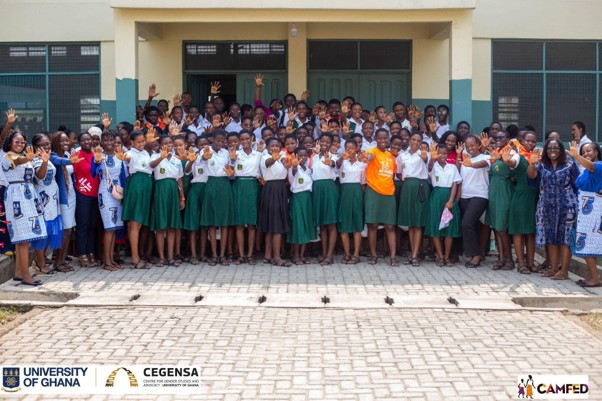
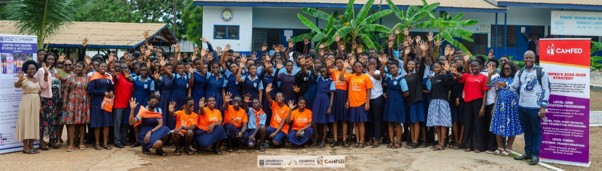
The Centre for Gender Studies and Advocacy (CEGENSA), University of Ghana, in partnership with CAMFED Ghana, has organised a series of sensitisation programmes on Gender-Based Violence (GBV) and cyberbullying for students of Odorgonno Senior High School and Armed Forces Senior High Technical School in Burma Camp.
The outreach forms part of CEGENSA’s commitment to extending its advocacy on gender equality, safety, and the prevention of gender-based violence beyond the University of Ghana campus to secondary schools across the country. Through these engagements, CEGENSA seeks to equip young people with the knowledge and tools needed to identify, prevent, and respond to violence and abuse in their communities.
Opening the programme at Odorgonno Senior High School, the Headmaster, Mr. Patrick Adu Asare, encouraged students to actively participate in the session and take advantage of the opportunity to learn.
“Anything that would help you leave the four walls of this school better is what we embrace,” he stated.
Addressing the students, the Director of CEGENSA, Professor Deborah Atobrah, underscored the importance of reporting abuse and seeking support without delay. She advised students to preserve evidence in cases of sexual violence, noting that such evidence can be critical in seeking justice.
Professor Atobrah also reassured students that counsellors and support systems are available to assist victims and survivors of abuse.
The programme was delivered through two interactive training sessions led by experts in psychology and mental health.
The first session, facilitated by Ms. Harriet Adjei, a Clinical Psychologist at the University of Ghana Careers and Counselling Directorate, focused on cyberbullying and its growing impact on young people. She shared statistics highlighting the prevalence of bullying among students and noted that many victims are often reluctant to report incidents due to fears that no action will be taken.
“Anyone can be a victim or a perpetrator,” she stressed, adding that decisions made on social media platforms such as WhatsApp, TikTok, and Instagram can have lasting emotional and psychological consequences.
Ms. Adjei further educated students on the signs and effects of cyberbullying and offered practical guidance on responsible online behaviour and ways to avoid becoming perpetrators.
The second session was led by Dr. Johnny Andoh Arthur, Senior Lecturer at the Department of Psychology, University of Ghana. His presentation explored various forms of violence, including emotional, sexual, and domestic violence, as well as harmful practices such as forced marriage.
Dr. Andoh Arthur cautioned students against normalising violence, whether through media representations or experiences within their homes and communities. He encouraged students to challenge harmful behaviours and attitudes, emphasising that learned behaviours can be changed.
“Anything you have learnt, you can unlearn. We are training you to become leaders of change,” he noted.
He also highlighted the support services available through organisations such as CAMFED Ghana, including counselling and shelter services for victims and survivors of abuse.
The programmes featured student-led poetry recitals that called for an end to gender-based violence and promoted respect, equality, and safety for all. The events concluded with confidential counselling and support sessions, creating a safe space for students to seek guidance, ask questions, and access available support services.
Through collaborations such as this, CEGENSA continues to strengthen efforts to prevent gender-based violence, promote positive social norms, and empower young people to become advocates for safer and more inclusive communities.